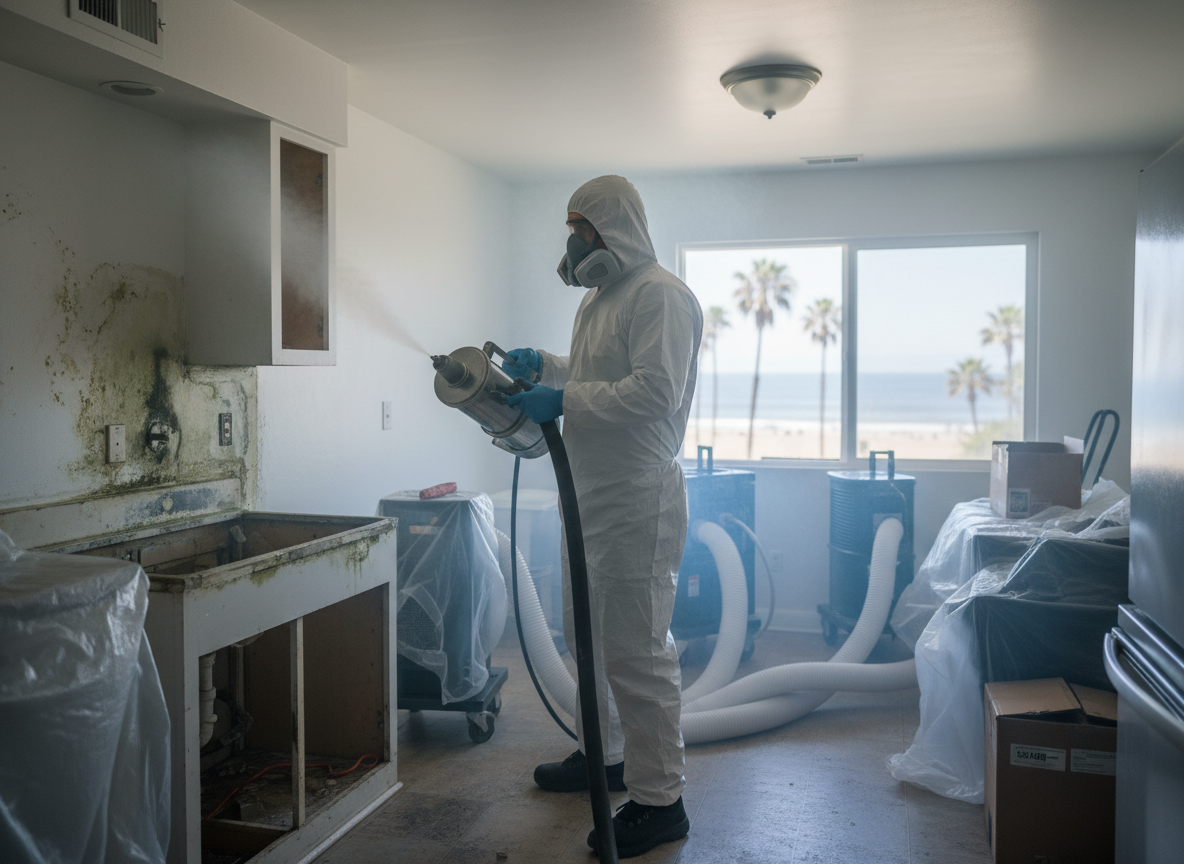
Playa Del Rey Village homes built decades ago often trap moisture behind original plaster and single-pane windows, especially those backing up to Ballona Creek. Marine layer fog rolls in nightly and keeps relative humidity elevated even when daytime temperatures stay mild, allowing mold to grow in wall cavities and under flooring without obvious water stains. Odor removal requires locating these hidden colonies with moisture meters and thermal imaging before any surface cleaning begins.
Silicon Beach renovations frequently open up older crawl spaces that have never been ventilated properly. Once disturbed, musty odors travel through HVAC returns that were installed before current Los Angeles County ventilation standards. Proper odor removal here means isolating the system, cleaning or replacing affected ductwork, and confirming negative pressure so spores do not migrate into living areas during the work.
Properties closest to Playa Del Rey Beach and Dockweiler State Beach face constant salt air that corrodes metal vents and window frames, creating repeated entry points for moisture. Odor removal in these homes often involves treating both the visible growth and the embedded smell in porous materials like drywall and carpet padding that cannot be fully salvaged once saturated.
Nearby Culver City and Marina Del Rey clients sometimes discover their odor problem actually originates from a shared wall or roofline with a Playa Del Rey structure. Because the coastal microclimate differs from just a few blocks inland, treatment plans must account for how fog lingers longer in the lower elevations around the creek and beach.
Technician insight
In Playa Del Rey, the thing that catches most people out with odor removal mold is how the nightly marine layer fog keeps crawl spaces and wall cavities damp long after any visible leak is fixed, especially in homes along Ballona Creek where the terrain traps moisture.
Hidden Growth Behind Original Plaster
A homeowner near Dockweiler State Beach noticed a persistent musty smell after a foggy week. Inspection found elevated moisture in a north-facing wall that had never been opened during a prior remodel. We isolated the room, removed saturated drywall sections, treated the framing, and ran dehumidifiers until readings normalized. Odor was gone after neutralization and the wall was rebuilt with proper ventilation.
How it works
- 1
Initial Assessment
Technician inspects for hidden moisture using meters and imaging, focusing on areas prone to marine layer intrusion near Ballona Creek and beachfront lots.
- 2
Containment Setup
Negative air machines and plastic barriers isolate affected zones so odors and spores do not spread through older ventilation systems common in Playa Del Rey Village.
- 3
Source Removal and Cleaning
Non-porous surfaces are cleaned with antimicrobial agents; heavily contaminated porous materials are removed and disposed of following Los Angeles County guidelines.
- 4
Odor Neutralization
Fogging or hydroxyl treatments address embedded smells in remaining materials after physical removal is complete.
- 5
Verification and Drying
Post-treatment moisture readings confirm the structure is dry and odor-free before barriers are removed.
Pricing
Cost depends on the size of affected areas, whether HVAC components require cleaning, and access challenges in older coastal construction.