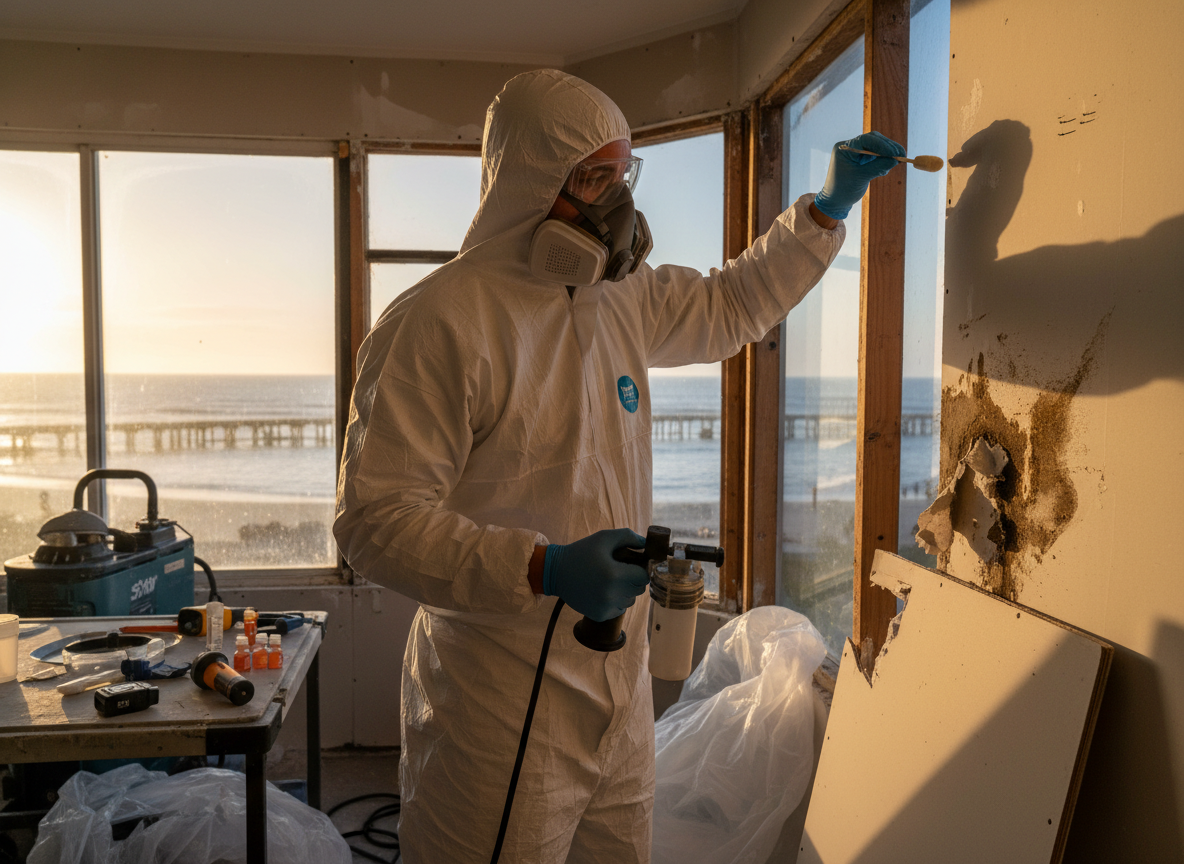
Playa Del Rey homes sit in a mild coastal climate where marine layer fog keeps humidity elevated for days at a time. This persistent moisture works its way into older stucco and wood-frame houses common along Pacific Avenue and near Ballona Creek, especially in crawl spaces and behind bathroom walls. Testing here means checking air samples and surface swabs in multiple zones because fog-driven condensation often hides behind newer drywall added during Silicon Beach renovations.
Los Angeles building codes require proper ventilation in coastal zones, yet many properties near Culver City and Marina Del Rey still have original single-pane windows and minimal attic venting. These conditions let spores settle in insulation and HVAC ducts that run through unconditioned spaces. A proper test includes lifting carpet edges, accessing attics, and sampling supply registers to map where the marine air has created hidden growth.
Testing also accounts for seasonal shifts. Winter fog events raise indoor dew points faster than summer, while summer winds off Playa Del Rey Beach can push spores through small gaps around sliding doors. Technicians note these patterns because a single missed pocket near Dockweiler State Beach can allow regrowth once remediation finishes.
Why Marine Layer Fog Changes Testing Strategy
Fog blankets the area most mornings, raising relative humidity inside older homes even when outdoor temperatures stay mild. This forces inspectors to run moisture meters on north-facing walls and check under sinks where condensation collects against cooler stucco.
Common Testing Locations in Local Housing Stock
Focus areas include attics above 1960s-era homes in Playa Del Rey Village, crawl spaces near Ballona Creek, and laundry rooms in multi-unit buildings along Culver Boulevard. These spots trap moisture that newer coastal remodels often overlook.
Technician insight
In Playa Del Rey the thing that catches most people out with Mold Testing is the marine layer fog that keeps crawl spaces and north walls damp for weeks even when the sun comes out. Homes near Ballona Creek and in the older sections of Playa Del Rey Village often have original slab edges that wick moisture straight into framing, so a quick surface check misses the real source.
Hidden Growth Behind Remodeled Bathroom
A homeowner in Playa Del Rey Village noticed musty smells after a recent shower remodel. Testing revealed elevated spores in the wall cavity where new drywall met the original stucco exposed to daily marine layer fog. Samples from the attic and HVAC return confirmed spread through shared ducts. Removal of the affected section and targeted drying stopped the issue before it reached neighboring units.
How it works
- 1
Initial Phone Assessment
Gather details on property age, recent leaks, and visible signs near Playa Del Rey Beach or Ballona Creek.
- 2
On-Site Visual Walkthrough
Inspect attics, crawl spaces, and HVAC returns in homes throughout Playa Del Rey Village and Silicon Beach.
- 3
Air and Surface Sampling
Collect samples from multiple zones while noting marine layer effects on humidity.
- 4
Lab Analysis and Report
Send samples for identification and provide findings with location-specific recommendations.
- 5
Follow-Up Consultation
Review results and outline next steps if elevated levels appear.
Pricing
Cost depends on square footage, number of samples, and access challenges common in older Playa Del Rey homes; upfront quotes provided after phone assessment.