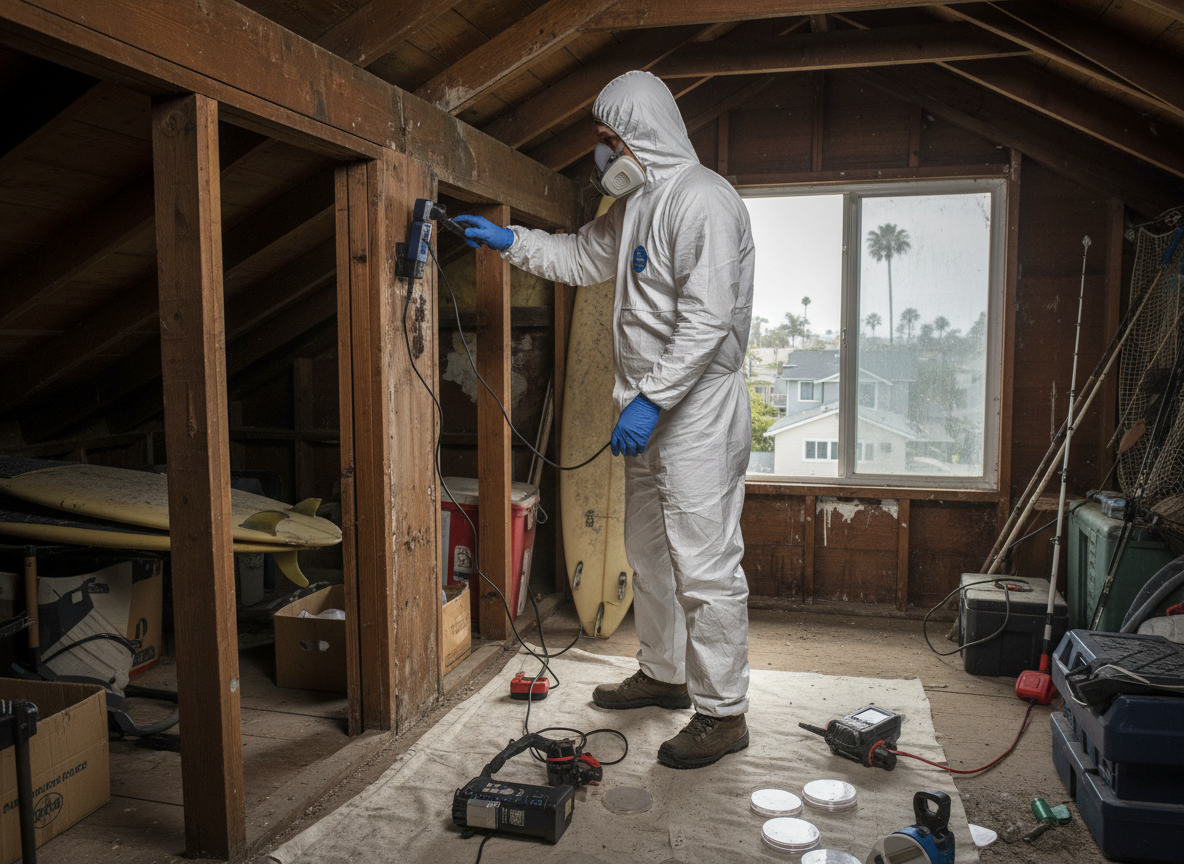
Playa Del Rey homes built before 1970 often feature single-wall construction and crawl spaces that trap moisture from the marine layer fog rolling off Playa Del Rey Beach and Ballona Creek. A proper mold inspection starts with moisture mapping using calibrated meters on drywall, subfloors, and attic sheathing rather than relying on visible stains alone. Inspectors check HVAC returns that pull air from the Dockweiler Beach area, where salt air accelerates condensation on metal ducts during temperature swings between day and evening fog.
Silicon Beach townhomes and Marina del Rey-adjacent condos frequently share walls with neighboring units, allowing mold to travel through common plenums when one unit experiences a slow leak. The inspection protocol includes borescope examination of wall cavities around windows facing the Pacific and thermal imaging of slab edges near the creek where groundwater wicking is common. Los Angeles County building codes require documentation of any remediation that disturbs more than ten square feet, so inspectors note affected materials and recommend containment strategies before any disturbance occurs.
Homeowners in Playa Del Rey Village often mistake musty odors from Ballona Creek tidal flows for mold when the real issue is elevated humidity in enclosed patios. The inspection distinguishes between these by taking relative humidity readings at multiple elevations and comparing them against dew point data for the current marine layer conditions. Edge cases include mold growth inside hollow-core doors and behind built-in cabinetry where coastal humidity never fully dries out the particleboard cores.
Post-inspection reports include photographic documentation of every tested location and a prioritized list of areas requiring moisture correction before any cleaning begins. This prevents repeat growth when southwesterly winds push additional fog inland from Dockweiler State Beach.
Technician insight
In Playa Del Rey the thing that catches most people out with Mold Inspection is the marine layer fog that keeps relative humidity above 70 percent inside crawl spaces for weeks at a time. Older single-wall homes near Ballona Creek never fully dry between fog events, so surface samples alone miss growth inside the wall cavities where the real moisture sits.
Crawl Space Inspection After Neighbor Leak
A homeowner in Playa Del Rey Village noticed a persistent musty smell after heavy winter rains. Inspection revealed elevated moisture in the shared crawl space originating from a slow drain line leak in the adjacent unit. Air samples confirmed elevated aspergillus levels. Containment recommendations and targeted drying were provided before any cleaning began.
How it works
- 1
Site Walk and Moisture Survey
Technician records visible conditions and uses moisture meters on all suspect surfaces in crawl spaces, attics, and wall cavities typical of Playa Del Rey housing.
- 2
Air and Surface Sampling
Spore trap and tape lift samples are collected from living areas and HVAC systems, then compared against outdoor baselines drawn from the same marine layer conditions.
- 3
Source Identification
Borescope and thermal imaging locate hidden moisture behind walls near Ballona Creek and windows facing Playa Del Rey Beach.
- 4
Written Report and Recommendations
Findings are compiled with photos and prioritized next steps that align with Los Angeles County requirements for any future remediation work.
Pricing
Pricing reflects square footage, number of samples, and access difficulty in older coastal homes.