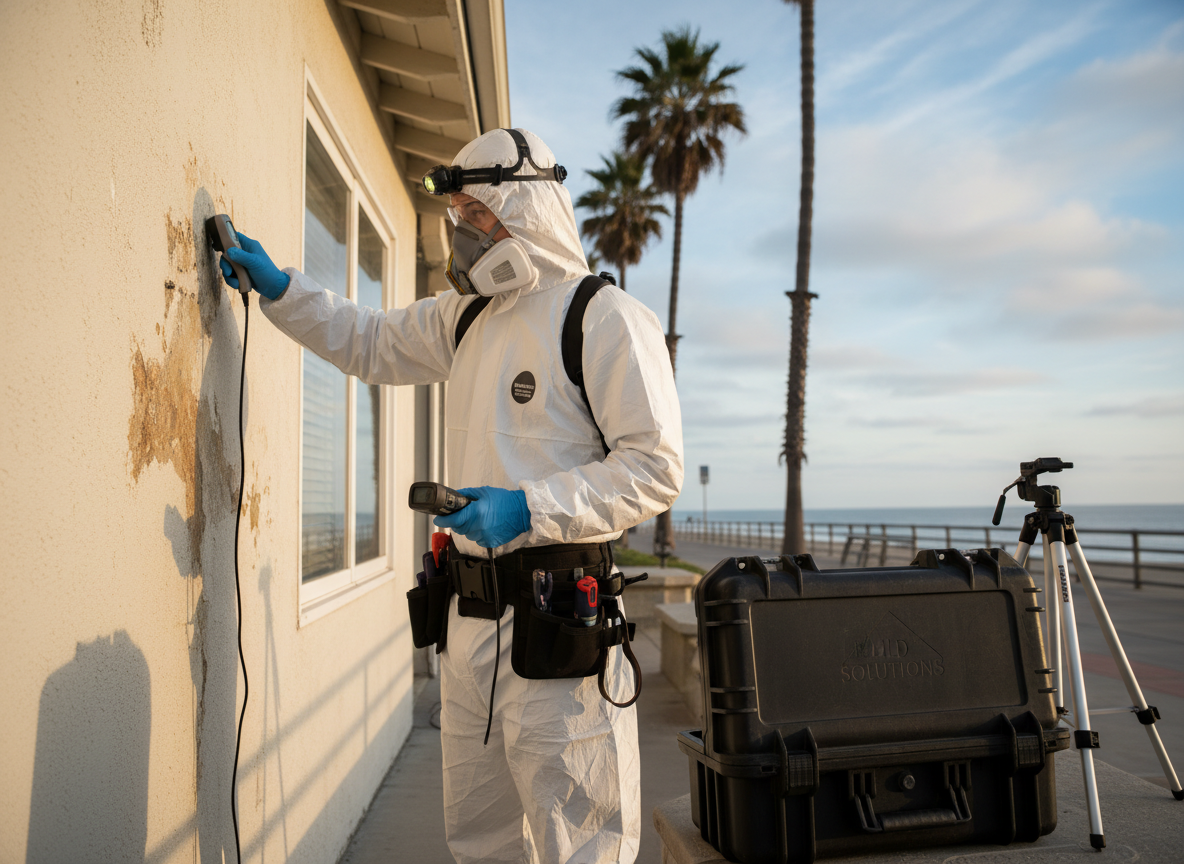
Playa Del Rey homes, especially those in Playa Del Rey Village and near Silicon Beach, often date from the 1950s through 1980s with original crawlspaces and attics that trap moisture from the mild coastal climate and frequent marine layer fog. This fog rolls in from Playa Del Rey Beach and Dockweiler State Beach, raising humidity levels that promote condensation on ductwork and insulation. Inspectors check these areas first because visible surface mold is rarely the full story in this terrain.
Proximity to Ballona Creek adds another layer of risk, as seasonal water table fluctuations and tidal influences can push damp air into foundations of homes in the Dockweiler Beach area and nearby Marina Del Rey. Los Angeles building practices from earlier decades left many properties without modern vapor barriers, so inspectors use moisture meters on subflooring and rim joists rather than relying on visual checks alone. Skipping these spots commonly leads to missed growth that later requires full remediation.
A proper home mold inspection here includes sampling from multiple zones because air flow patterns between Culver City and the coast move spores through open floor plans common in local bungalows. Technicians document findings with photos and diagrams so homeowners see exactly where humidity from fog or creek proximity created conditions for growth. This level of detail prevents unnecessary demolition while catching real issues before they spread.
Technician insight
In Playa Del Rey, the thing that catches most people out with Home mold inspection is the marine layer fog that soaks into attics and crawlspaces of 1960s homes near Ballona Creek without ever showing leaks on interior ceilings. Homeowners check bathrooms and kitchens but miss how the consistent humidity from Dockweiler State Beach area condenses on older insulation and ductwork. That single detail changes whether the job stays inspection-only or turns into remediation.
Crawlspace Growth Near Playa Del Rey Beach
A homeowner in the Dockweiler Beach area noticed musty smells after weeks of heavy fog but saw no visible mold upstairs. Inspection revealed elevated moisture in the crawlspace from creek-influenced humidity and missing vapor barrier on 1970s construction. Targeted sampling confirmed growth on joists; the report outlined ventilation upgrades and localized drying to prevent spread into living spaces.
How it works
- 1
Initial Walkthrough
Technician examines exterior grading, rooflines, and vents around the property in Playa Del Rey Village to identify water entry points tied to coastal fog and creek proximity.
- 2
Moisture Mapping
Readings are taken on walls, floors, and ceilings using meters calibrated for the marine layer humidity typical near Dockweiler State Beach and Ballona Creek.
- 3
Targeted Sampling
Air and surface samples are collected from attics, crawlspaces, and HVAC systems where older homes in the area commonly hide growth due to poor ventilation.
- 4
Detailed Report Delivery
Findings are compiled with location-specific recommendations that account for Los Angeles coastal building stock and local weather patterns.
Pricing
Pricing depends on square footage, number of stories, and access to crawlspaces and attics common in Playa Del Rey homes; upfront quotes provided after initial walkthrough.