Playa Del Rey Village homes built in the 1960s and 1970s often have unvented crawl spaces and single-pane windows that trap the marine layer fog rolling off Playa Del Rey Beach and Dockweiler State Beach. This persistent humidity drives mold growth behind baseboards and in attic insulation long before visible signs appear. Abatement here requires removing affected drywall sections while protecting HVAC systems that run continuously in the mild Los Angeles coastal climate. Crews must also address condensation points along Ballona Creek where cooler soil temperatures meet warmer indoor air.
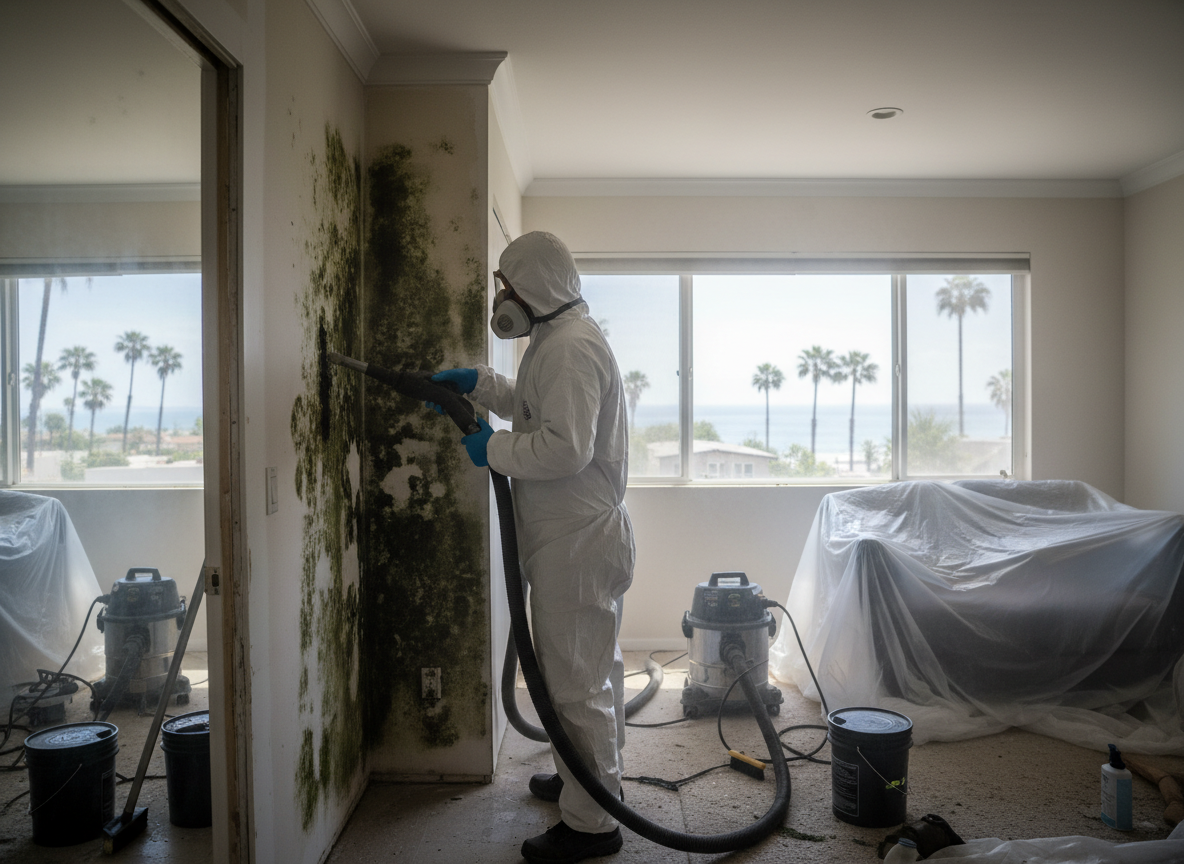
Silicon Beach townhomes near Marina Del Rey and Culver City frequently feature stucco over wood framing that hides leaks from roof valleys or bathroom exhaust fans. During abatement, technicians cut out sections of drywall and insulation, then apply antimicrobial treatments followed by negative-air machines to contain spores. The process differs from inland jobs because the high salt content in coastal air accelerates corrosion on metal HVAC components, requiring extra drying time before new materials are installed. Homeowners in these neighborhoods often discover mold only after a tenant reports musty odors near windows facing the ocean.
Edge cases arise in older Dockweiler Beach area properties where original plaster walls meet modern additions. Removing mold from these mixed-material assemblies demands careful separation of porous and non-porous surfaces to avoid spreading spores through shared wall cavities. Abatement crews document moisture readings at multiple depths because fog-driven condensation can reappear weeks later if underlying sources near the creek are not fully dried. Final clearance testing focuses on both living spaces and crawl spaces to confirm levels meet Los Angeles County habitability standards.
Technician insight
In Playa del Rey, the thing that catches most people out with mold abatement is the marine layer fog that keeps crawl spaces under 1960s homes in the Village area damp for weeks even after visible leaks are fixed, so we always run extended drying before closing walls back up.
Hidden Attic Mold After Window Leak
A homeowner in Playa Del Rey Village noticed musty smells near the ceiling after winter fog season. Inspection revealed mold growth on insulation above a bathroom where a window seal had failed. We removed the affected insulation and drywall section, treated the joists, and ran dehumidifiers for five days until readings dropped. Clearance testing confirmed safe levels and the space was ready for new insulation.
How it works
- 1
Site Assessment
Technicians inspect all accessible areas including crawl spaces and attics, using moisture meters and borescopes to locate hidden growth behind walls in Playa Del Rey Village homes.
- 2
Containment Setup
Plastic barriers and negative-air machines isolate the work zone to prevent spore migration through HVAC systems common in Silicon Beach properties.
- 3
Removal And Cleaning
Affected materials are removed, surfaces are treated, and remaining areas receive HEPA vacuuming and antimicrobial application suited to the salt-air environment.
- 4
Drying And Clearance
Dehumidifiers run until moisture levels stabilize, followed by independent air sampling to verify safe conditions before reconstruction begins.
Pricing
Pricing varies by square footage affected, access difficulty in older coastal homes, and extent of hidden growth behind walls or in crawl spaces near Ballona Creek.