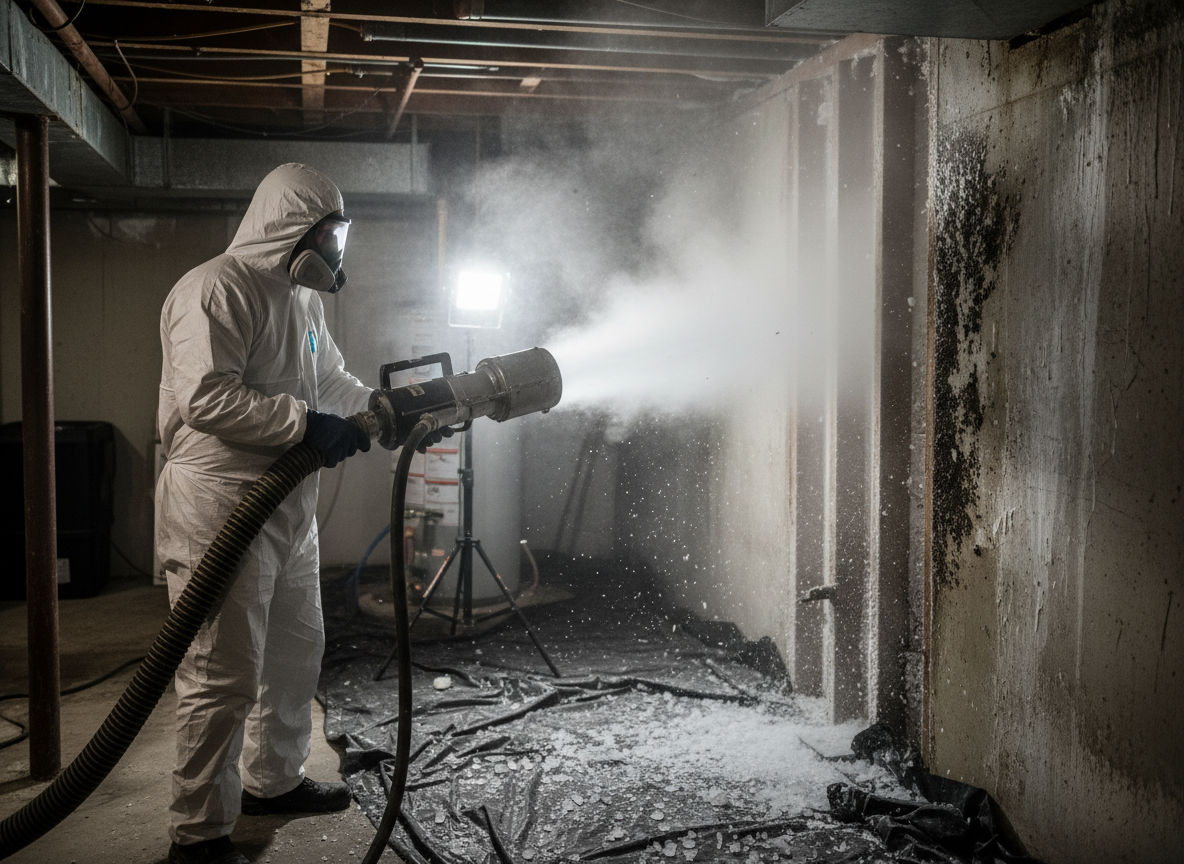
Dry ice blasting removes mold from wood, concrete and plaster without introducing additional moisture into Playa Del Rey homes. The process uses solid CO2 pellets accelerated at high velocity to lift surface growth and penetrate porous materials common in older Silicon Beach properties. Marine layer fog that rolls in from Playa Del Rey Beach and Dockweiler State Beach keeps relative humidity elevated year-round, so technicians must verify moisture levels in framing and subfloors before and after treatment to prevent regrowth.
Near Ballona Creek and in the Dockweiler Beach area, tidal influences and occasional storm runoff increase the risk of hidden mold behind baseboards and in crawl spaces. Dry ice blasting reaches these tight cavities without the water damage that liquid cleaning methods can cause. Los Angeles County building codes require proper containment and HEPA filtration during any remediation; crews set up negative air machines and seal off living spaces to keep spores from migrating into adjacent rooms in Marina del Rey or Culver City.
Local Climate Considerations
Mild temperatures combined with persistent fog create condensation on cooler surfaces inside homes built before modern vapor barriers became standard. Dry ice blasting works well here because it leaves no residue and allows immediate inspection of cleaned surfaces. Homeowners in Playa Del Rey Village often discover mold after roof leaks or window failures that go unnoticed until the marine layer brings extra moisture.
Technicians always wear supplied-air respirators and monitor CO2 levels when working in enclosed garages or basements common in this neighborhood. Post-blasting, surfaces are vacuumed with HEPA equipment and treated with EPA-registered antimicrobials only when the substrate allows it. This sequence prevents the dust and spore release that can occur with traditional sanding or wire brushing in humid coastal conditions.
Technician insight
In Playa Del Rey, the thing that catches most people out with dry ice blasting mold is the marine layer fog that keeps crawl spaces and wall cavities damp even when the rest of the house feels dry. Older homes near Ballona Creek and Dockweiler State Beach often have original framing that traps moisture from the creek side, so blasting alone fails if we do not address the hidden water source first.
Hidden Growth Behind Kitchen Cabinets
A homeowner in Playa Del Rey Village noticed a musty smell after weeks of heavy fog. Inspection found mold behind cabinets where a small roof leak had soaked the drywall. We contained the kitchen, blasted the studs and sheathing with dry ice, removed the damaged material, and confirmed dryness before reinstalling. The odor disappeared and no regrowth appeared after the next marine layer cycle.
How it works
- 1
Initial Assessment
Inspect affected areas in the home using moisture meters and borescopes to map mold extent without disturbing spores.
- 2
Containment Setup
Seal rooms with plastic sheeting and run negative air machines to protect adjacent living spaces.
- 3
Dry Ice Blasting
Apply CO2 pellets to wood, drywall and concrete surfaces to dislodge mold growth.
- 4
HEPA Vacuum and Wipe
Remove loosened debris and clean remaining surfaces with approved agents.
- 5
Final Verification
Re-test moisture and air quality before removing containment.
Pricing
Pricing varies by square footage, depth of growth, and access difficulty in older coastal homes.