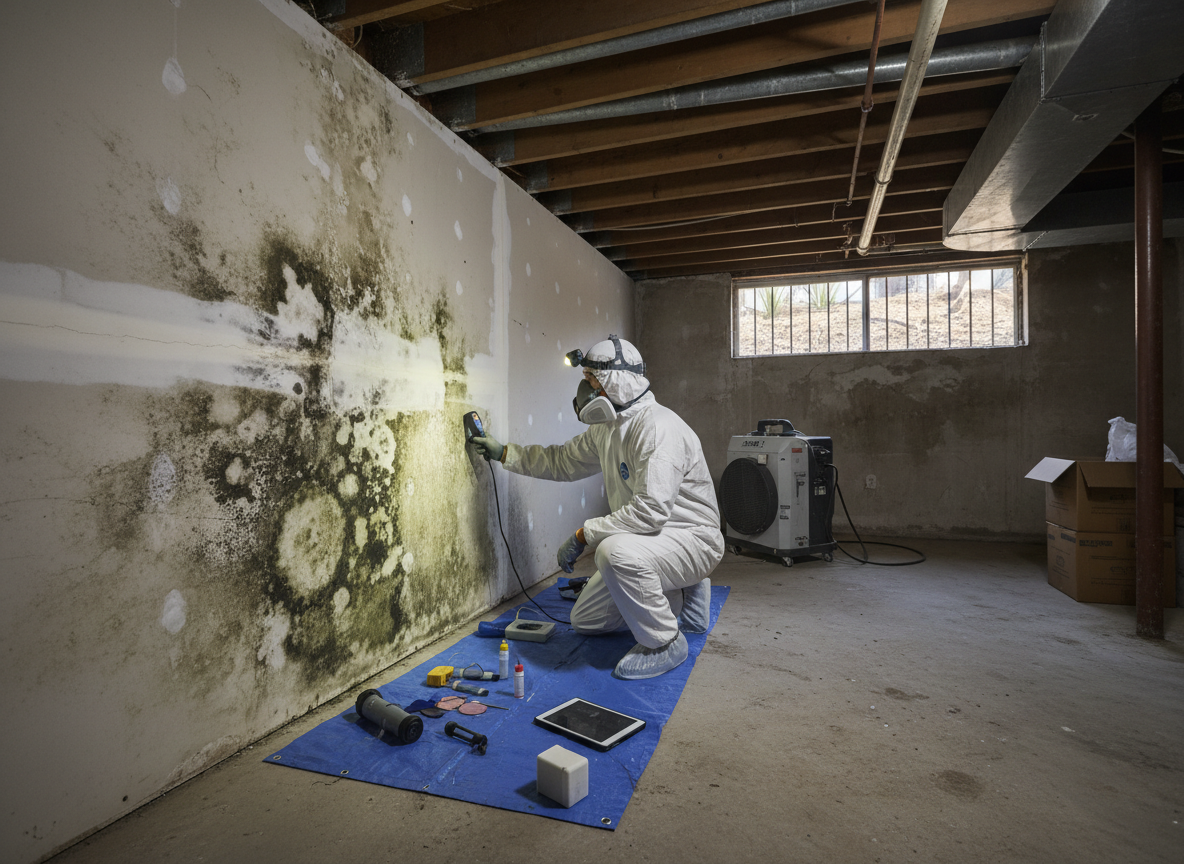
Playa Del Rey basements sit close to the water table along Ballona Creek and receive steady moisture from the marine layer that rolls in most mornings. Older homes in Playa Del Rey Village and the Dockweiler Beach area often have concrete stem walls and crawl spaces that trap humidity against untreated wood framing. During inspection we map relative humidity at multiple depths, check for efflorescence on foundation walls, and use infrared to locate cold spots where fog-driven condensation collects behind drywall.
Silicon Beach renovations frequently convert garages or lower levels without proper vapor barriers, creating hidden pockets where mold grows on paper-faced gypsum and OSB subfloors. We examine sill plates for rot, test soil moisture outside foundation drains, and note any grading issues that direct runoff from nearby streets toward the structure. Los Angeles County requirements for habitable space below grade also mean we flag ventilation deficiencies that inspectors will later require to be corrected.
Edge cases common here include salt-air corrosion on metal lath in stucco walls and mold growth inside HVAC ducts that pull air from crawl spaces. We document every finding with photos and moisture logs so homeowners can see exactly which materials need removal versus drying. Access through narrow stairwells or finished spaces in Marina Del Rey and Culver City properties often requires dust containment protocols that add time but prevent cross-contamination to living areas above.
Technician insight
In Playa Del Rey, the thing that catches most people out with Basement mold inspection is the marine layer fog that keeps relative humidity above 70 percent even on sunny days; older homes near Ballona Creek often have no perimeter drain, so water sits against the stem wall and you find mold on the back side of drywall that looks perfectly dry from the room side.
Dockweiler Area Basement
A homeowner in the Dockweiler Beach area noticed a musty smell after heavy fog weeks. We mapped elevated moisture along the north foundation wall next to Ballona Creek, found hidden growth on the back of gypsum board, and isolated the source to missing exterior grading. Containment and targeted removal restored dry conditions without affecting the finished upper floors.
How it works
- 1
Initial Assessment
Review property history and visible signs of moisture while noting proximity to Ballona Creek or the beach.
- 2
Moisture Mapping
Use meters and infrared on walls, floors, and sill plates to locate active damp areas created by marine fog.
- 3
Air and Surface Sampling
Collect targeted samples from basement corners, HVAC returns, and any suspect materials for lab analysis.
- 4
Report and Recommendations
Deliver written findings with photos, moisture readings, and a prioritized list of remediation steps.
Pricing
Upfront quotes based on square footage, access difficulty, and number of samples required.